

Medically reviewed by Dt. Mehmet Can Acar
Published on
Taking a break from exercise for the first 24–72 hours following dental implant surgery is generally the safest approach. Whilst you can gradually resume light walks within a few days, you may need to wait longer before resuming running, weightlifting and intense workouts. This is because exercise can raise blood pressure, triggering bleeding and swelling, and may put strain on the healing surgical site.
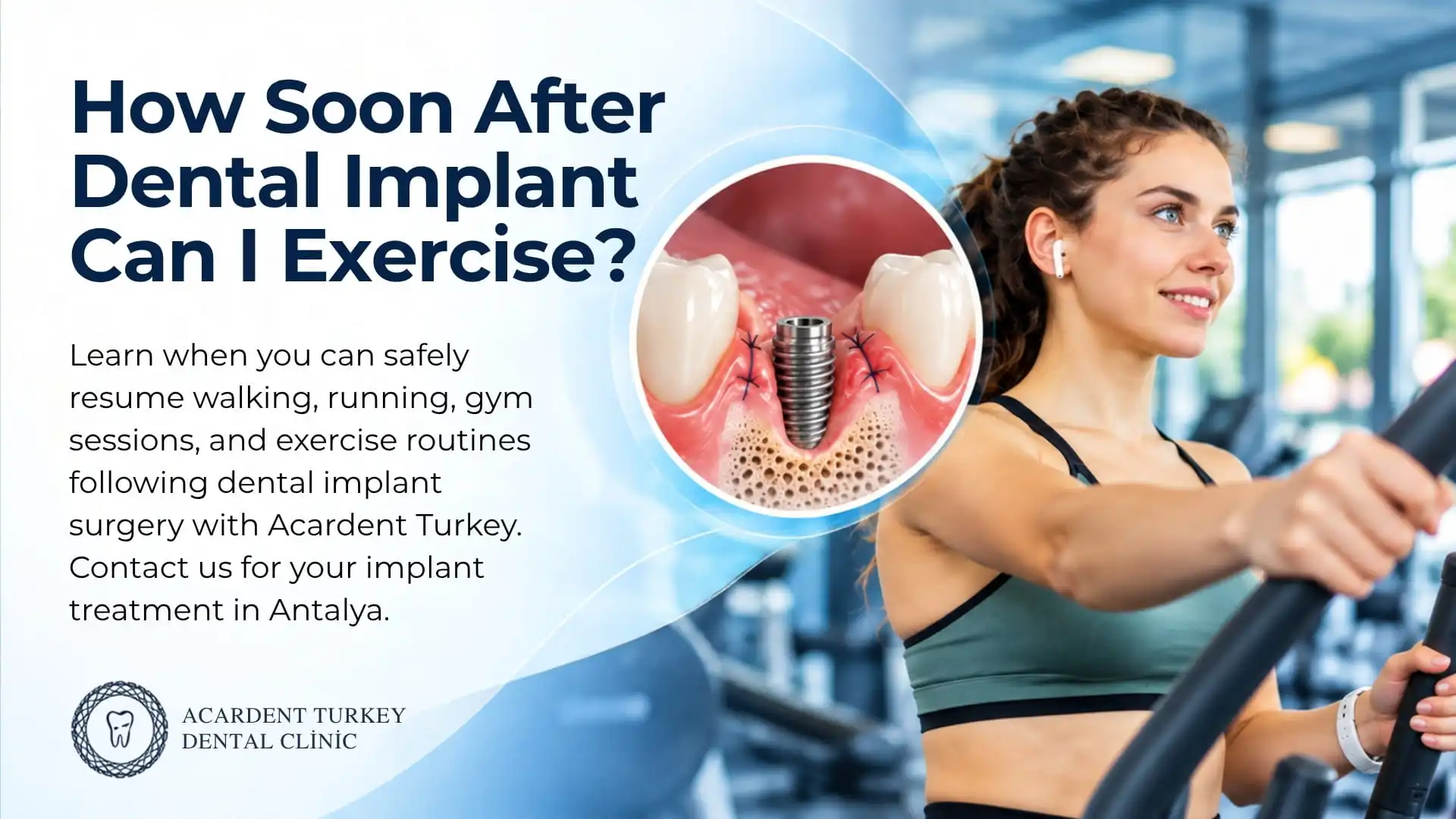
Think of the first few days as a gentle ‘settling-in period’ for the newly placed implant. The aim is not to remain completely inactive, but to allow time for healing whilst gradually increasing activity in a controlled manner. When you can return to your normal exercise routine depends on the additional treatment carried out – such as a single implant, multiple implants, all on 4 or a bone graft – and your personal rate of recovery. Therefore, your treating dentist’s advice should always take precedence when it comes to resuming strenuous exercise.
If you are considering dental implant treatment in Antalya and want to return to your sports routine with confidence, contact Acardent Turkey Dental Clinic, and let us create a personalised recovery plan for you.
Dental implant recovery timeline: When can you exercise again?
The first 24–72 hours: Rest
In the first few days after surgery, your body begins to heal the surgical site. The blood clot that forms acts as a natural protective layer over the wound. Strenuous exercise can raise your blood pressure, increasing the risk of bleeding and swelling.
During this period:
- Take a break from the gym, running, swimming and weightlifting.
- Keep your head slightly elevated whilst resting.
- Avoid lifting heavy objects and bending forward for long periods.
- Apply cold compresses as recommended by your dentist.
- Drink plenty of water and eat soft foods.
Short, slow walks around the house generally do not cause any problems. However, do not exercise, particularly during the first 24 hours.
Days 3–7: Light activities
If the bleeding has stopped and your pain and swelling have subsided, you can start taking short walks. Light stretching and breathing exercises may also be suitable.
However, avoid running, weightlifting, intense cardio and hot yoga. Also avoid any movements where you keep your head down.
Feeling well does not necessarily mean that the implant has fully healed. Whilst your gums are recovering, the bone surrounding the implant continues to heal.
Weeks 1–2: Gradually increasing exercise intensity
If your recovery is progressing smoothly and your dentist gives the go-ahead, you can resume some low- and moderate-intensity exercise within 7–14 days.
For example:
- Brisk walking
- Low-intensity stationary cycling
- Gentle yoga and Pilates
- Low-resistance exercises
Keep your first workout short. Avoid clenching your teeth or holding your breath whilst lifting heavy weights.
If you feel throbbing, pain or bleeding in the implant area whilst exercising, stop immediately.
Weeks 2–4 and beyond: Returning to your normal exercise routine
Following simple implant surgery, some patients may be able to return to more intense training within 2–4 weeks. However, this timeframe varies from person to person.
Gradually resume heavy weightlifting, high-intensity interval training (HIIT) and long-distance running.
Boxing, football and other contact sports require greater caution. A blow to the face could damage the implant site whilst it is healing.
Important: It may take several months for the implant to fuse with the jawbone (osseointegration). If you have undergone a bone graft, sinus lift or multiple implant treatment, your return to exercise may take longer. Always seek your dentist’s approval before starting intensive training.
Warning signs to watch for after implant surgery
If you notice any of the following symptoms during or after exercise, stop exercising immediately:
- New bleeding around the implant
- Throbbing during or after exercise
- Swelling that is increasing rather than subsiding
- Pain that was not present before
- Loosening of the stitches
- A sensation that the implant is moving or becoming loose
Your body may be signalling to you through these symptoms that it is ‘not yet ready’. If the symptoms persist or you feel movement in the implant, contact your dentist.
Conclusion: Do not rush back into exercise after an implant
The safest approach is to take a break from exercise for the first 24–72 hours following dental implant surgery, then start with light walks and gradually increase your activity level. The timeframe for returning to intensive training varies depending on the number of implants, any additional treatments such as bone grafts, and your rate of recovery. You should therefore consult your dentist to decide when to start which exercises.
If you are planning dental implant in Antalya, please contact Acardent Turkey Dental Clinic. Let’s work together to incorporate your recovery process and return-to-sport timeline into your treatment plan.