
Gum recession is actually one of the most common gum problems we see in adults. Research shows that around 50% of adults between 18 and 64 already have gum recession in at least one area, and after age 65 that number goes up to nearly 88%.
A lot of people first notice it when the teeth start looking longer, sensitivity begins around cold drinks, or the gum line starts looking uneven in the mirror. That’s why gum grafting has become such a common treatment today. Below, we’ll go through who actually needs it, how the procedure is done, healing stages, recovery time, risks, and what kind of results people can realistically expect.
What is a gum graft?
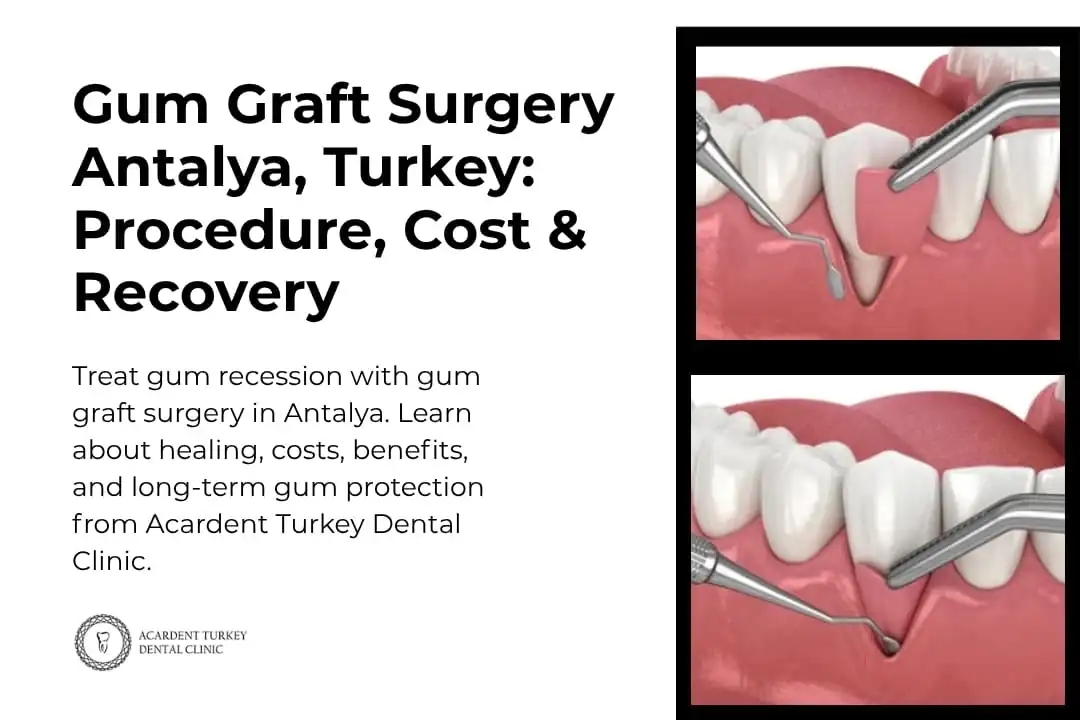
A gum graft is basically a procedure we do when the gums start pulling away from the teeth and the roots become exposed.
A small piece of tissue, usually from the roof of the mouth or sometimes from another safe donor source, is taken and placed over the area where the gum has receded. The main aim is to protect the root again and rebuild that lost gum line little by little.
Who needs to have gum grafting?
People need gum grafting when the gums have pulled down enough to expose the tooth root.
If you see longer-appearing teeth, sensitivity to cold drinks, brushing discomfort or gums, you might be a candidate. Some people also start seeing little notches near the gum line because the root surface stays exposed for too long.
We also recommend gum graft when the gum becomes too thin. Because thin gum tissue tears and recedes more easily over time during hard brushing, grinding or gum disease.
What are the benefits of gum grafting?
It’s done to protect the teeth long-term and stop the recession from getting worse over time.
Some of the main benefits are the following:
- Covers exposed tooth roots
- Reduces tooth sensitivity
- Helps protect against root decay
- Makes the gum line look more even
- Prevents further gum recession
- Strengthens thin gum tissue
- Improves long-term tooth support
- Makes brushing more comfortable
- Creates a healthier-looking smile
What happens during gum graft surgery?
First, the area is made numb so you don’t really feel pain during the treatment.
Then the exposed part of the tooth is cleaned properly. After that, a small piece of gum tissue is placed over the area where the gum has pulled away, often using tissue from the roof of the mouth.
Everything is held in place with tiny stitches so the tissue can heal and attach there slowly. As the area heals over the next weeks, the gum starts looking thicker and the exposed root becomes more protected again.
How long does gum graft surgery take?
Gum graft treatments usually take around 45 minutes to 1.5 hours. Teeth number and recession rate are important factors for duration.
What happens after gum grafting?
The first few days you keep the area and let the tissue settle without irritation. Healing is usually gradual, so being a little careful at the beginning really helps the result.
Some important things you should pay attention to:
- Don’t brush directly on the graft area at first
- Stick to softer foods for several days
- Avoid very hot drinks the first days
- Try not to pull the lip or cheek to check the area constantly
- Mild swelling or soreness is normal early on
- Smoking slows healing a lot; honestly, it's best avoided
- Avoid hard exercise the first couple of days
- Use the mouthwash or medications exactly as instructed
- Don’t chew directly on the treated side initially
- Tiny stitches usually stay for a short healing period
What’s the gum graft recovery timeline?
The first 1–2 days are usually the most uncomfortable part. The gums can feel sore, tight and a bit swollen, and eating is awkward at first. If tissue was taken from the roof of the mouth, that area can sting a little too, especially while eating or drinking something hot.
During the first week, the graft usually starts settling into place. The colour can look pale or uneven, and that worries people a lot… but honestly that’s pretty normal early healing. Mild bleeding or sensitivity can happen the first days too, especially if the area gets irritated accidentally.
By the second week, things get well noticeably. Most people start eating more comfortably again, and the soreness drops a lot. The gum also begins looking more natural.
After a few weeks, the tissue becomes stronger and blends better with the surrounding gums. The final shape and colour take longer, though, sometimes a couple of months, because the gum keeps healing quietly underneath even after it already feels fine day to day.
FAQs
Does gum graft surgery hurt?
No, you don’t feel pain with local anaesthesia.
After the numbness wears off, some soreness or throbbing for a while is completely normal, especially during the first few days. Use your medicines prescribed by your dentist to control your pain.
What are the risks or complications of gum graft surgery?
Gum grafting is a pretty routine and safe periodontal procedure. However, some complications are possible. The most common things we see are temporary swelling, soreness, slight bleeding and sensitivity during the early healing period.
How long does it take to recover from a gum graft in Turkey?
You get better within 1–2 weeks, but the gum tissue usually takes a few months to fully settle and reach its final healing stage.
Can you get implants with receding gums?
Yes, you can in many cases, but the gums and bone around the area need to be healthy enough first.
If there is a recession or significant bone loss, you need treatment before a dental implant procedure. Otherwise, the implant may not stay stable long-term.
When is it too late for a gum graft?
When gum recession progresses to an advanced stage and bone loss becomes significant, the success of gum graft treatment may decrease, and it may become difficult to completely cover the root surface. Therefore, early diagnosis and treatment of gum recession are crucial for both healthier healing and more successful aesthetic results.
How much is a gum graft in the UK and Turkey?
Gum graft treatment in the UK is usually around £800 to £2,000 per tooth/area, while in Turkey it’s often closer to £100 to £350.
For a more accurate price based on your own gums and recession level, you can contact Acardent for proper evaluation before planning anything.
Conclusion
Gum grafting treatment is one of the effective periodontal procedures that helps stop gum recession, protect exposed root surfaces, and strengthen gum health. Healthy gums are crucial not only for natural teeth but also for the long-term success of tooth implant treatments, as strong gum and bone support helps implants remain more stable and healthy. At Acardent Turkey Dental Clinic, gum grafting and dental implant treatments are planned individually by specialist dentists according to the patient's oral structure and needs.